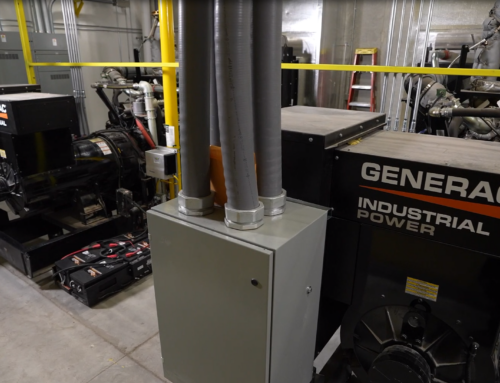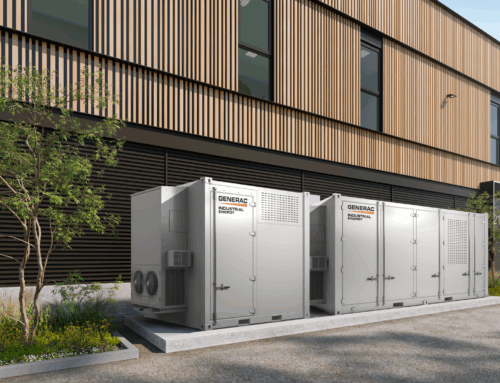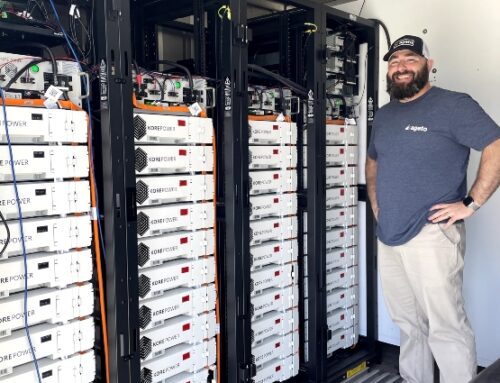
Battery Energy Storage Systems (BESS) play a pivotal role in the transition to a sustainable energy future. These systems offer various benefits such as peak shaving, load balancing, grid stabilization, and renewable energy integration. However, the integration of BESS into electrical networks demands careful consideration of safety measures to mitigate potential risks. This post explores the importance of pairing BESS and isolation transformers. BESS typically consist of lithium-ion or other battery technologies, power conversion systems (PCS), and control systems. These components interface with the electrical grid and dynamically manage energy flow to maintain system stability.
Role of Isolation Transformers with BESS
Because the primary and secondary windings remain physically and electrically separated, a transformer provides effective isolation in power distribution networks while also stepping voltage levels up or down. Isolation transformers serve as crucial components in BESS installations by electrically isolating the battery system from the grid. They offer several key benefits:
1. Inverter Output Configuration: Industry typical energy storage inverters are delta 3-wire output without neutral. A delta-wye isolation transformer may be required if the facility requires a 4-wire wye connection including a neutral conductor.
2. Ground Fault Protection: Isolation transformers help detect and isolate ground faults, preventing potential hazards and ensuring system integrity.
3. Voltage Spike Reduction: installation of an isolation transformer can reduce voltage spikes before they reach the facilities load.
4. Equipment Protection: By isolating the BESS from the grid, transformers prevent fault currents from propagating upstream, thereby safeguarding sensitive equipment.
5. Harmonic Mitigation: BESS generate harmonics that transformers attenuate. This enhances delivered power quality and minimizes interference with other connected loads.
Various utilities require the use of an isolation transformer whenever interconnecting distributed energy resources (DER) into the utility grid. Additionally, regulatory codes and standards may require isolation transformers in BESS installations. Project developers must comply with these standards to obtain regulatory approvals and certifications.
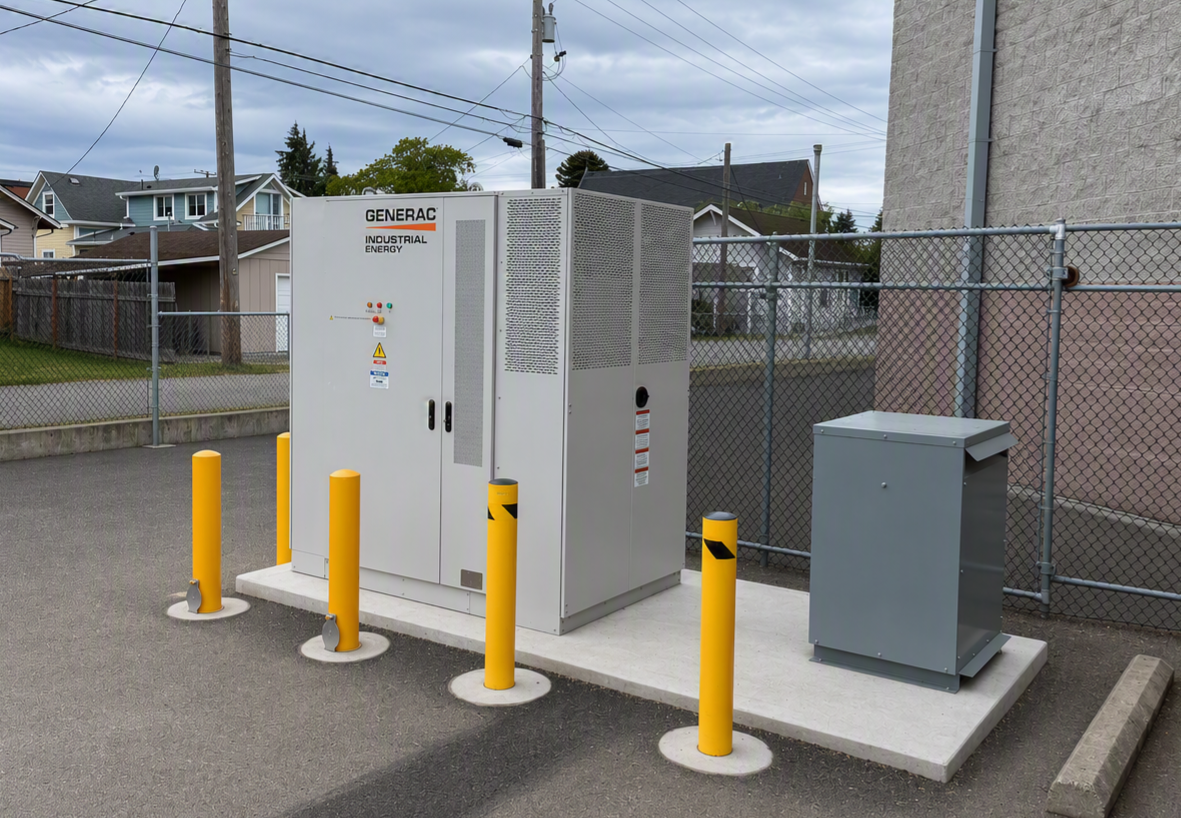
The Generac BESS must use a dedicated isolation transformer. No auxiliary loads, PV systems, or additional BESS units may be connected to it; each must have its own separate service feed. The BESS must have an uninterrupted, exclusive connection to the isolation transformer with nothing installed between them
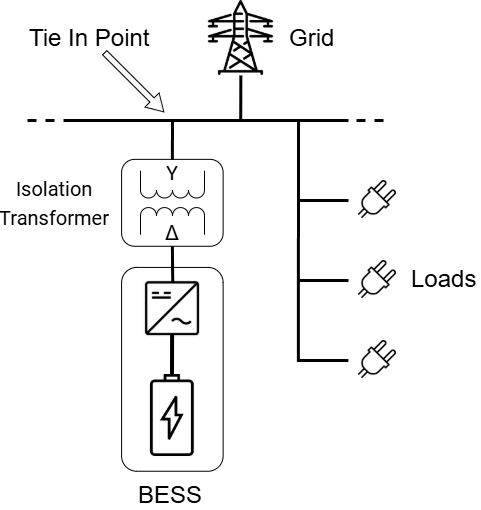
Transformer Specs
Transformer sizing for C&I BESS installations is fundamentally driven by the system’s intended operational profile. A BESS designed for frequent grid dispatch at or near the inverter’s nameplate rating typically requires additional transformer headroom to accommodate sustained high‑power cycling. In contrast, a BESS configured with substantial inverter margin to handle only occasional peak site loads can utilize a transformer sized to the inverter rating. Evaluating how the BESS will be used—whether for heavy grid support, infrequent peak shaving, or mixed‑mode operation—ensures the transformer is appropriately matched to both the expected loading and the system’s long‑term performance requirements.
Nonetheless, transformer sizing for C&I BESS installations should align closely with the inverter’s nameplate rating. This ensures efficient power transfer and prevents unnecessary parasitic loading on the BESS. Different PCS manufacturers recommend transformers with differing K factors. An electrostatic shield is recommended to reduce common‑mode noise and improve power quality at the BESS interface. Additionally, the transformer must be designed for bidirectional operation to support both charging and discharging modes without degradation in performance. Coordinating inverter capacity, transformer rating, K factor, and other required electrical features ensure stable operation and long‑term transformer reliability. If uncertain about the appropriate isolation transformer size or specs, consult the inverter manufacturer’s recommendations or required specifications for transformer selection.
Conclusion
In conclusion, the integration of Battery Energy Storage Systems (BESS) into electrical networks necessitates the use of isolation transformers to ensure safety, reliability, and regulatory compliance. Isolation transformers play a critical role in mitigating risks associated with electrical faults, ground faults, and harmonics, thereby facilitating the safe and efficient operation of BESS installations.